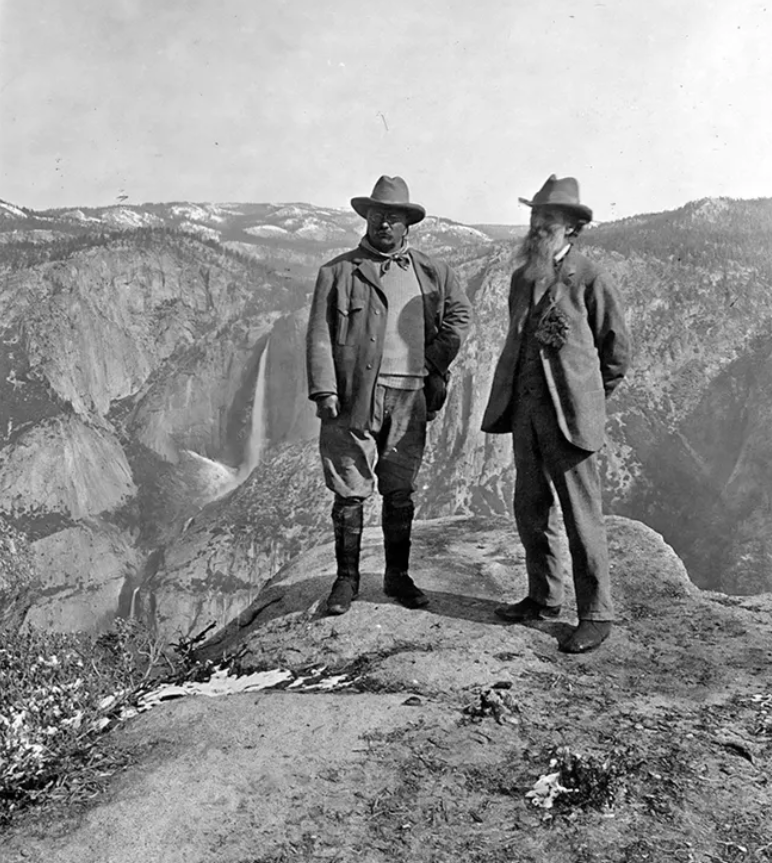
Theodore Roosevelt and John Muir
What Was The Creation of the National Parks?
The creation of the National Parks was a successful effort in the late 19th and early 20th centuries to protect American wilderness, preserving it for future generations to admire and enjoy. Although it began with Ulysses Grant’s creation of Yellowstone in 1872, this endeavour is most famously attributed to conservationist John Muir, and 26th US President Teddy Roosevelt. That is not to say it began with those two, as Teddy Roosevelt began his work in creating national parks in 1902 with the formation of Crater Lake National Park. In 1903, Roosevelt wrote to John Muir asking him for a tour of Yosemite. In those days, mining and logging were taking a toll on these pristine lands throughout the country. Folks like Muir wanted to make sure that there were federal protection measures in place to restrict companies’ ability to strip the lands of their natural resources. During the three day tour, Muir walked with Roosevelt through the valley, and Roosevelt, a notable outdoorsman himself, recognized the same need as did Muir. Over the next three years, Roosevelt set out to expand Yosemite National Park to include Yosemite Valley. This action put the Valley under federal protection. During the rest of his presidency, the President established five other national parks to include Crater Lake (1902), Wind Cave (1903), Sully’s Hill (1904), Mesa Verde (1905), and Platt (1906), which is now part of the Chikasaw National Recreation Area.
What Was It Like?
As we see time and time again in our day, anything that could be brought by one political party would be challenged by the opposing party. Despite several national parks having already been created over the previous twenty years, Roosevelt felt much pushback at his efforts. Granted, he was known to declare protective measures by bypassing Congressional approval. He also met opposition from private interests such as industrialists who sought to continue their mining and logging efforts on these now publicly-protected lands. Interestingly, his views were also out of favor with the Native American population, as Roosevelt believed that nature was to be untouched by man, and that man could only mar nature, putting aside an understanding that man is nature and so can exist in it harmoniously. He was further opposed for the displacement of these Native Americans by way of forcing them to abandon the newly-created Parks. Over his presidency, Roosevelt created not only the US Forest Service, but also over 150 national forests and five national parks.
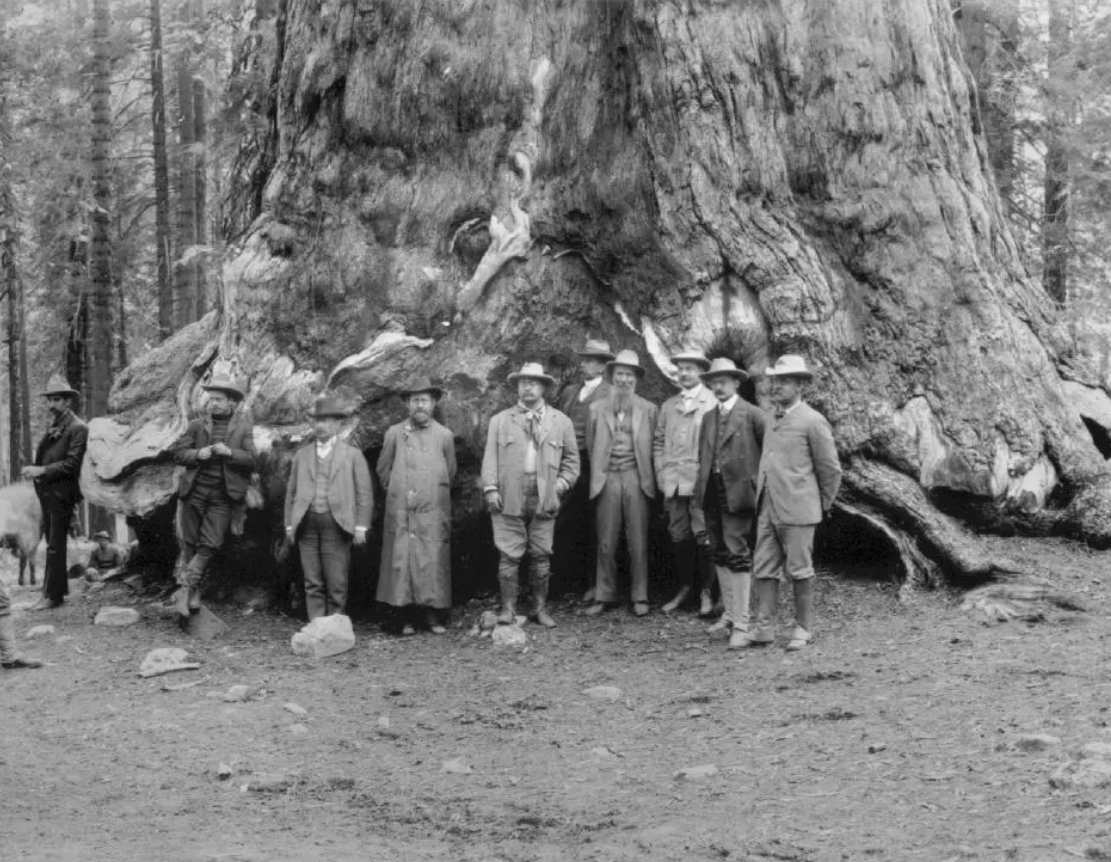
Theodore Roosevelt, John Muir, Secretary of the Navy Moody, California Gov. Pardee, and others
Why Did It Stop?
Efforts to preserve have not entirely stopped, but Yosemite has faced a significant setback due to the Hetch Hetchy controversy. After the 1906 San Francisco earthquake, the city requested that a reservoir be built in Hetch Hetchy Valley, which was within Yosemite National Park, to provide water. Muir strongly opposed this request. He sought pure preservation of the wilderness. Roosevelt was between Muir's stance against this and Gilford Pinchot's (his chief conservation advisor), who believed in conservation as efficient resource use rather than plain preservation. Pinchot wanted Roosevelt to allow the damming of Hetch Hetchy. Ultimately, preservation efforts failed, leading to the damming of Hetch Hetchy Valley in December 1913, after Roosevelt left office.
Local Implications
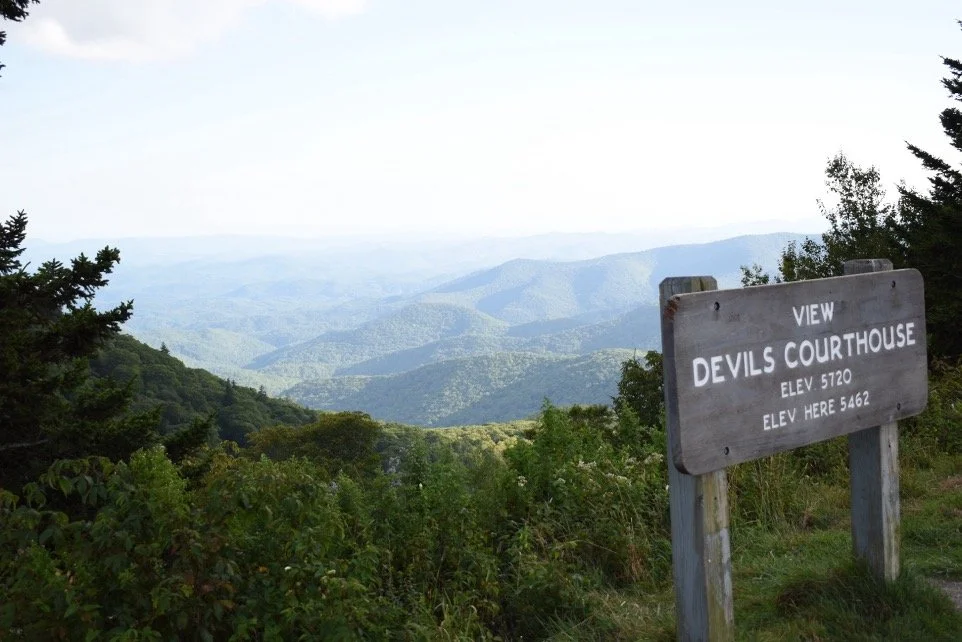
The local implications have both positive and negative effects from the creation of national parks. I think the positive effects outweigh the negative effects personally. Although I am biased because I love our national parks. To look at the positive and negative effects, you must think of tourism, jobs, funding, and diverse business opportunities.
First, I’d like to look at the negative effects. For the locals of these regions, the parks bring in lots of tourists. This is very familiar to those of us who have grown up in NC. We largely see an influx in traffic during peak times of the leaf season. Not only is there more traffic, but we also see price increases to support the tourism economy. These price increases are not only in shops and restaurants but also in housing opportunities. The view we see is gorgeous, but we literally pay for it when renting and owning property. We have seen this since Airbnb has become popular. We have a lot of out-of-town people who come and buy property to rent as a profit and increase the prices during peak times. This makes it hard for local people to be able to buy at reasonable prices. In addition to non-peak times of the year, locals pay the extra prices to ensure small businesses stay open.
Second we also have to think of the physical impact it takes to maintain our parkways. It takes a toll on roads and infrastructure when peak seasons come, and tourists can cause a lot of damages that then need to be repaired. Not only do the roads have to be maintained but we see a lot of people using graffiti and littering all up and down these parks. This is not only another thing that has to be fixed, but also can cause harm to the wildlife that lives in the parks. Tourists trying to engage with the wildlife is another issue. You have some people who will come and illegally hunt in the parks because they know the park is often well populated. This can cause harm to the animal population. Also, people enjoy hiking these parks. This is a great way to stay active, but often people can become lost or missing entirely due to not understanding the terrain or not being educated on what they will need for their hikes.
Positive effects to me are endless. The locals appreciate the beauty preserved. For a lot of people, the parkway is a way to unwind and relax in times of stress. For some, it might be a peaceful date, enjoying something beautiful. For others, it may be a safe haven to watch the stars and take pictures. It is always a perfect place to study and research forestry and biology. Not only is it perfect to observe beauty, but it does help locals form small businesses that thrive on tourism. That can create niche boutiques and restaurants. We see this a lot with breweries as well. As locals, we can enjoy the parks year-round and it is part of our daily lives. The option to travel on the parkway and enjoy a scenic route on your way home is amazing compared to just traveling the interstate.
The parkway has also created jobs for many, from park rangers to road workers, as well as for nature preservation. According to the National Park Service, parks contribute to over 340 thousand jobs. This alone is a huge factor. Parks contribute a large amount of money to the economy. Visitors to the park contribute an estimated amount of 29 billion in visitor spending. This is a huge impact to our economy. Collectively, the parks put in about 56.3 billion dollars. These are just a few of the positive impacts the parks have but truly to me the most impact comes from having a place protected to slow down from the fast pace life we live.
National Implications
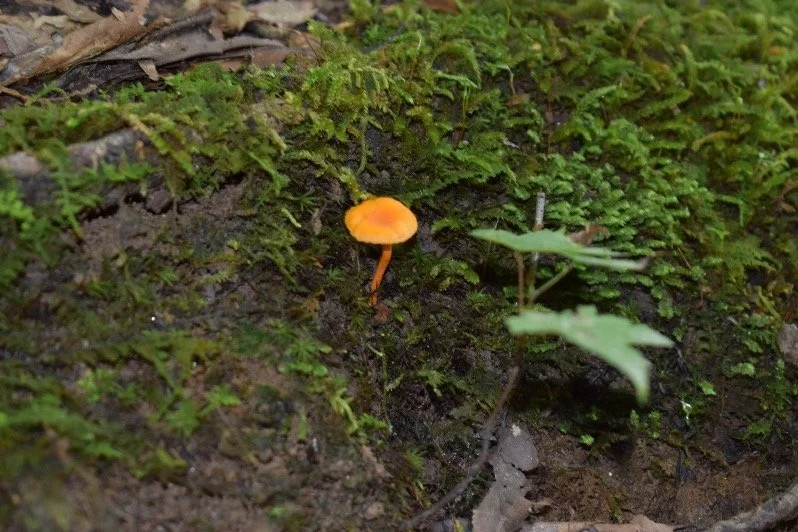
The national implications are also endless. One point would be just the simple historical impact. In school, we learn about the parks’ creation and preservation. We still have and maintain a piece of history that many generations had before us, and how we used the parks to expand and build roads and jobs. Nationally, the parks make a significant contribution to our economy. National parks also receive federal funding, and observation efforts have protected many species. The parks also contribute to research and a better understanding of biology and preserve the local ecologies as well. The parks also aid in our life by being some of the only protected forests in the nation. These forests aid in our carbon footprint and help filter out and reduce carbon emissions. They filter our air and give clean oxygen all around us. In a world that is filled with industry and buildings all around us, these parks show the natural beauty that surrounds us and provide a safe haven for all.

Why Are The National Parks Important To Us?
The creation of Yosemite and the National Parks matters today because it captures one of the rare times in history when people chose restraint over greed. John Muir and Theodore Roosevelt understood that “progress” shouldn’t always mean expansion. Roosevelt and Muir's partnership and friendship garnered in Yosemite of 1903; the camping trip that changed conservation forever, set a precedent that still shapes environmental thought. They weren’t just saving the scenery or the chance to go on vacation; they were saving a mindset. A mindset we truly cannot afford to lose. They believed that nature had intrinsic worth, that mountains and forests didn’t need to justify themselves by profit. That philosophy feels radical again in our century of consumption and climate anxiety.
Modern life moves fast and cities sprawl, data piles up, the planet runs hot! But, the National Parks pull us back into the slow, grounding rhythm of the natural world. They remind us that beauty itself can be an ethical argument. When you stand in a park like Yosemite, the air alone feels like a reset button. You realize the trees don’t owe you productivity, and the rivers don’t rush to meet a deadline.
Protecting wild land is, at its core, protecting our ability to feel wonder. It’s not nostalgia - it’s self-preservation. If Muir’s lasting wish and life goal was “keep close to nature’s heart,” then maybe ours is just to remember how to listen. Those places show what people can actually do when they care about something bigger than themselves, how people can actually come together and be a worldly community. And honestly, with everything going on — climate mess, mental burnout, the political climate (is that too honest?), basically - the works, But, that kind of wisdom feels like the last thing we should be letting slip away right now. We only have this one land, this one earth, and it has so much more to show us - if we only listen instead of take.
NPS Editorial Staff. “John Muir and President Roosevelt.” National Park Service, 19 Dec. 2024, https://www.nps.gov/jomu/learn/historyculture/john-muir-and-president-roosevelt.htm?
National Parks’ Impact On Us As Americans
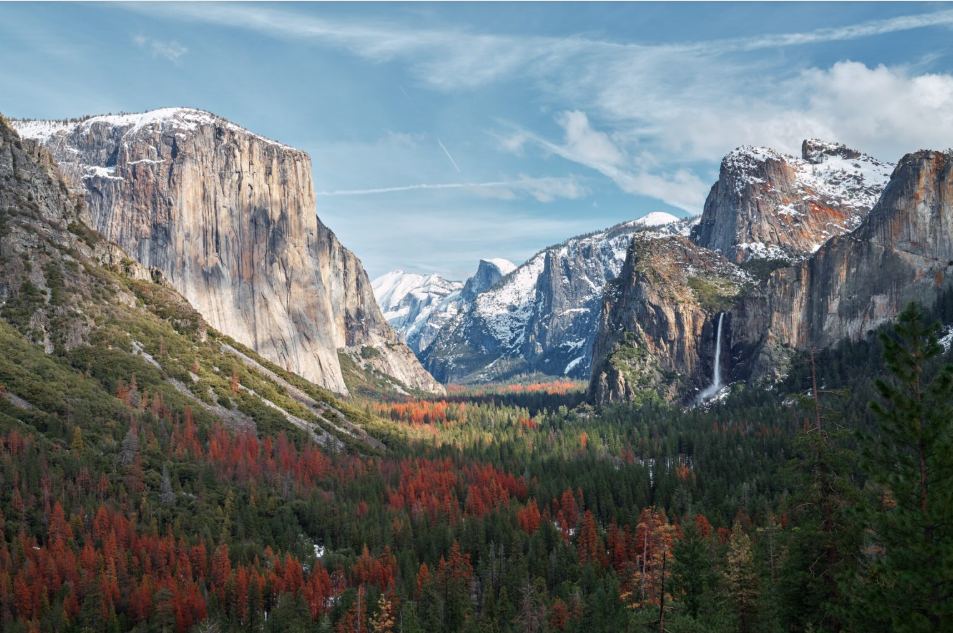
The story of Yosemite teaches us that the best parts of American identity come from learning when not to take. Our nation has always been defined by ambition, by pushing boundaries and building bigger! But the national-park idea represents a rare and mature kind of patriotism: the courage to say enough is enough. Muir and Roosevelt’s partnership embodied that turning point where a goal of exploration became a goal of preservation, and that shift still defines the soul of the country we claim to love.
Yosemite’s protection was an act of national self-definition. It told the world that America wasn’t just steel and cities—it was granite, redwoods, rivers, and sky. It reframed the myth of “manifest destiny” into a destiny worth sustaining. The park system reflects a democratic impulse too: this land belongs to everyone. You don’t have to be rich or powerful to walk through a national park. It’s the most egalitarian idea we’ve ever produced, a public cathedral of the natural world.
Being American, at our best, means choosing care over conquest. Our National Parks system showcases to us that we can be both innovative and be our humblest selves. That patriotism can; and maybe even should, look like planting trees instead of flags. Yosemite teaches us that protecting shared beauty is not weakness; or being a hippie or hipster, it is about wisdom. Every time we step onto those protected grounds, we are reminded that the land itself is part of our citizenship.
Stevens, Colton. “Why You Should Care about Our National Parks.” Planet Forward, 9 Jan. 2019, https://planetforward.org/story/national-parks-importance-college/.
What They Teach Us About Humanity
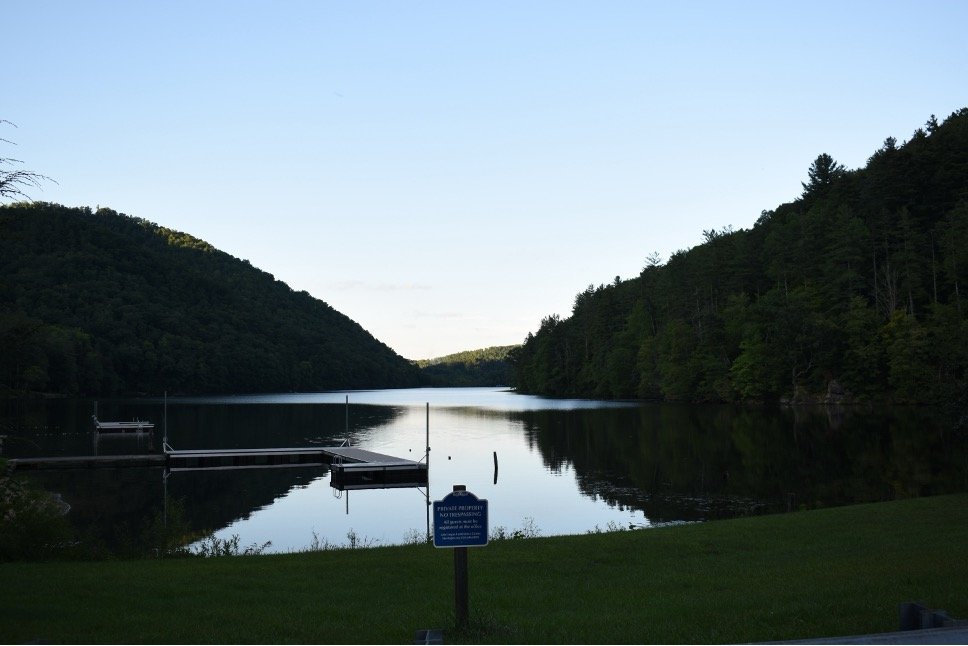
Yosemite, and the entire national-park experiment, tells a very human story: we are capable of reverence. Muir called it “the university of the wilderness,” a place where people relearn humility. When Roosevelt joined him under the stars, they weren’t just making policy—they were reconnecting with something ancient. Humanity’s greatness has always been measured by what we protect, not what we consume.
To care for nature is to remember our place inside it. The park idea expands morality beyond our species—it says that rivers, trees, and animals have a right to exist for their own sake. That’s not just environmentalism; that’s empathy in its highest form. In a time when climate headlines can feel hopeless, the existence of national parks whispers that we’re still capable of choosing differently.
Yosemite also teaches cooperation: a naturalist and a president found common ground for the common good. That moment proves that awe can bridge politics, ego, and era. It’s a blueprint for what humanity could still be—curious, grateful, protective. When we preserve a place like Yosemite, we preserve our own capacity for awe and truly whole human experience.
NRPA Editorial Team. Role of Parks and Recreation in Conservation. https://www.nrpa.org/our-work/Three-Pillars/role-of-parks-and-recreation-in-conservation/. Accessed 12 Nov. 2025.